
What Is CRM & What Is a CRM System?
CRM and CRM systems:
✓ Customer Relationship Management (CRM) refers to the strategic approach organizations use to manage all relationships and interactions with potential and existing customers in a structured way.
✓ A CRM system is essentially a customer relationship management platform that helps businesses acquire new customers and nurture existing ones.
Below you’ll find a more detailed explanation of CRM and CRM systems, along with an overview of the different types available on the market.
What is CRM?

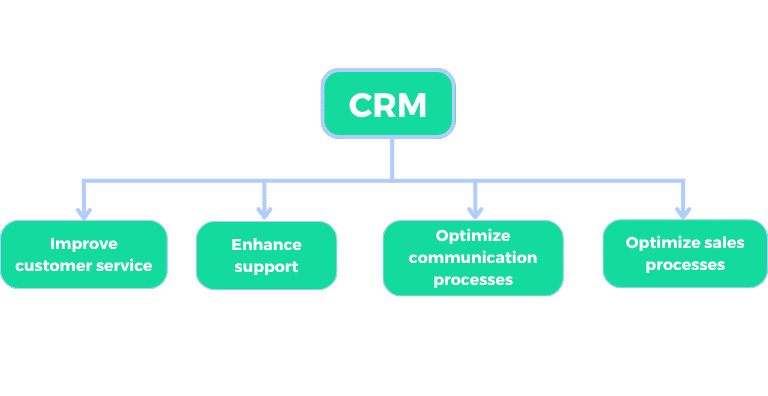
Customer Relationship Management (CRM) refers to the strategic approach companies use to build and maintain profitable, long term business relationships with customers. This is achieved, for example, through improvements in customer support and customer service as well as through more efficient communication and sales processes.
A modern CRM strategy typically goes beyond managing the current customer base. It also takes into account relationships with former and potential customers, employees, sales and business partners, suppliers, and other relevant stakeholders.
Because effective customer relationship management requires reliable data management regardless of a company’s business focus or sales strategy, the term CRM also refers to the supporting CRM system used to manage and structure this data.
What is a CRM system?
At its core, a CRM system is a powerful database that provides specialized features to support the operational activities derived from a CRM strategy. The software is used not only for the general storage and management of data, but also for recording, structuring, and organizing all contact and customer information as well as important additional details, such as current or planned interactions, communication histories, or expected closing opportunities. Modern systems also enable companies to map the entire value chain, from suppliers and partners to employees and customers.
Data, information, and ultimately knowledge represent the key resource of the twenty first century. It is not only the collection of customer data and information that creates value, but above all the transformation of this data into actionable knowledge, which is critical for maintaining competitiveness.
For example, insights from a CRM system can be applied to marketing activities such as website design, helping companies create more personalized user experiences and improve overall customer engagement. This might include dynamically adjusting content based on user preferences, tailoring product recommendations to past purchase behavior, and optimizing navigation flows to reduce friction.
A comprehensive customer view is a good example of this approach. Identifying and leveraging shopping cart analyses, cross selling potential, and purchasing cycles is essential and supports sustainable revenue growth. The primary purpose of such systems is therefore to support customer relationship management through the use of information technology.

What are the functions of a CRM system?
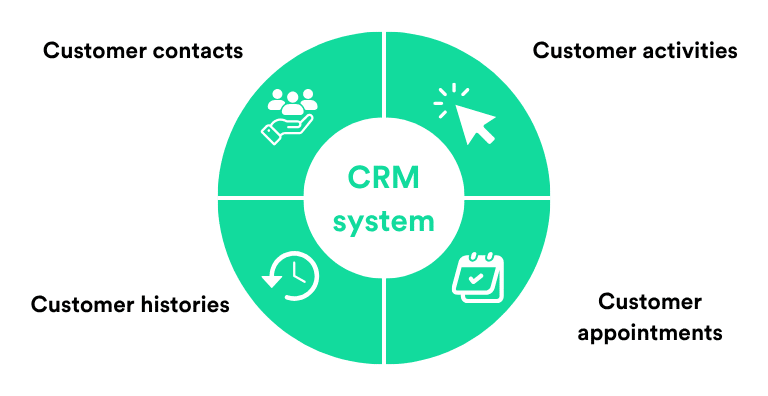
A CRM software stores all relevant customer relationship information, such as company details, contacts, contact data, sales opportunities (leads), quotes, orders, complaints, and service activities. The centralized database enables flexible and combined access across different departments to customer contacts, customer activities, customer appointments, and interaction histories.
Customer Relationship Management systems represent a strategically important IT solution for highly customer‑oriented organizations. Their relevance and demand have increased significantly in recent years, as more and more companies recognize the potential of these solutions. Modern CRM approaches also incorporate information from social networks and customer online behavior.
In addition to managing customers, CRM systems today also include relationships with
- prospective customers
- competitors
- employees
- suppliers
- stakeholders
This extended approach is commonly referred to as xRM (Extended Relationship Management).
Why is a CRM strategy so important?
However, problems do not arise only from error‑prone data management and organization, but also from a lack of clarity regarding the CRM strategy. For this reason, a clear strategic direction must first be established by company leadership. From this strategy, concrete goals are derived that the organization aims to achieve through CRM, along with the measures required to reach them.
If you know your goals but fail to achieve them with your current actions, your efforts may be moving in the wrong direction. For example, if you spend a great deal of time presenting your offerings to a broad target audience, but only a small number of people respond, the strategy should be reviewed and adjusted if necessary. This may involve segmenting different target groups and addressing them individually with more tailored approaches.
CRM Strategy: Dos and Don’ts
| ✅ Dos | ❌ Don'ts |
|---|---|
| Ensure consistent customer communication | Neglect customers after the initial contact |
| Build long‑term customer loyalty through regular, positive interactions | Maintain infrequent customer contact |
| Continue CRM measures consistently after the first positive interaction | Treat CRM as a one‑time initiative |
| Maintain centralized and accessible customer data | Keep information fragmented or undocumented |
| Enable access to customer history for all employees | Restrict employee access to important customer information |
| Provide fast and competent handling of customer requests | Delay customer requests due to missing information or limited access |
| Create a positive and attentive customer experience | Cause stress, confusion, and impatience in customer communication |
CRM Implementation: What Should Be Considered?
CRM software that aligns with the overall strategy is essential, especially for organizations with a large and or dynamic customer base, to ensure the consistent and error‑free maintenance and management of customer data over the long term. Because not only contact data but also all interactions and the complete customer history are stored within the CRM system, the software significantly simplifies customer relationship management.
Within a CRM solution, access rights to files, emails, and other relevant data can be assigned, modified, and managed quickly. This creates greater transparency and allows for flexible adjustments, such as accessing the email correspondence of an absent employee in order to provide seamless and competent customer support.
In addition, the many extended features and automation capabilities reduce the workload for all employees involved in customer interactions, allowing them to work more efficiently and focus on value‑creating activities.
The Key Success Duo for CRM
For CRM to be successful, it is crucial that the software supports business processes as effectively as possible while remaining easy to understand and use. Any entrepreneur who has introduced new software within their organization knows that such changes are received very differently by employees. Not everyone welcomes new systems immediately, shows interest on their own, or recognizes their benefits at first glance. If a company has not previously followed a defined CRM strategy, the new, more customer‑focused approach should be communicated clearly and early on. In this context, CRM software serves as a vital organizational tool and a significant relief in day‑to‑day work.
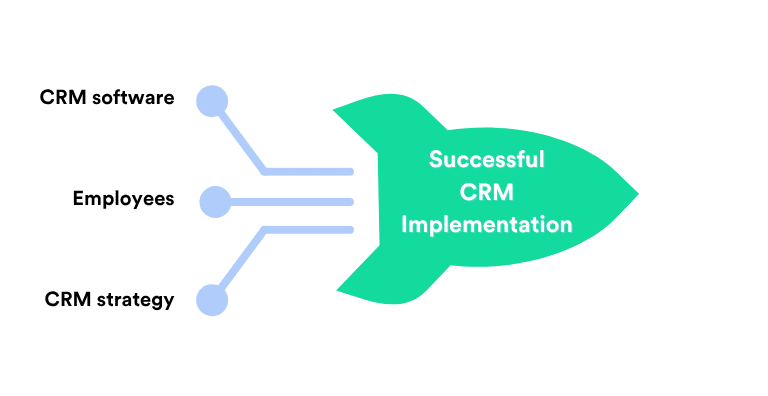
The market offers a wide range of software solutions for Customer Relationship Management. For this reason, business owners and decision‑makers must define their CRM strategy before selecting and implementing a system. The two core pillars of CRM, strategy and software, must be perfectly aligned. Introducing a new system therefore requires thorough planning. Ideally, this planning involves all team members who will work with the software on a daily basis and maintains a strong focus on practical application from the very beginning.
What are the goals of a CRM system?
Companies do not compete only on products, services, and prices, but also on the quality of their customer relationships. Those that actively nurture these relationships and provide personalized customer care are rewarded with long‑term loyalty and positive recommendations. Stable and lasting customer relationships give companies a clear competitive advantage and are often a decisive factor when customers choose between providers. Especially in highly competitive markets, a strong CRM strategy can make the difference.
Due to the wide variety of available offerings, which often differ only slightly, many prospects prefer providers that are known for
- delivering excellent service
- always being available for their customers
- responding quickly and constructively to issues or complaints
- reliably meeting deadlines and agreements
- doing everything possible to ensure complete customer satisfaction
Ultimately, the primary goal of Customer Relationship Management is competitive success, which means
- increased sales
- higher profits
- optimal profitability

A CRM system technically implements the CRM strategy and helps centrally manage customer‑related processes. The goal is to use customer data strategically, for example to increase customer satisfaction, optimize internal workflows, and enable targeted sales activities.
Example: A sales representative sees in the CRM system that a customer received a quotation several months ago. With just a few clicks, the full history is available, making it easy to follow up in a targeted way. This enables fast, personal, and efficient communication, strengthens customer relationships, and increases the likelihood of closing the deal.
Satisfied customers often share positive experiences, such as excellent advice or quick support. These recommendations are credible and have a stronger impact than traditional advertising. A CRM system creates the foundation for such experiences by ensuring consistent customer care and providing the right information at the right time.
How can the success of CRM be measured?
Strategic business goals, such as improving customer retention, can usually only be achieved through a combination of smaller, clearly defined sub‑goals. For example, to strengthen customer loyalty, companies can enhance customer support, offer particularly attractive deals to loyal customers, or maintain regular brand presence through targeted marketing activities, thereby clearly differentiating themselves from competitors.
CRM KPIs: Which metrics are essential?
KPIs (Key Performance Indicators) provide insights into different aspects of customer relationships and help measure the performance of a CRM system. Depending on business goals and strategies, additional KPIs may be relevant. The most important ones include:
- Conversion Rate: Percentage of prospects who become paying customers.
- Lead Response Time: Average time required to respond to customer inquiries or leads.
- Churn Rate: Percentage of customers who leave or terminate their relationship with a company.
- Customer Lifetime Value (CLV): Estimated revenue a customer generates over the entire duration of the business relationship.
- Customer Satisfaction (CSAT): Level of customer satisfaction based on surveys or direct feedback.
- Net Promoter Score (NPS): Measure of how likely customers are to recommend a company.
- Average Deal Size: Average value of closed sales deals.
- Customer Retention Rate: Percentage of customers retained over a defined period of time.
- Response Rate: Percentage of marketing messages that receive a response from customers.
Why is the term “CRM solution” used so frequently?
Modern CRM systems are often promoted as software solutions for customer relationship management. In fact, these CRM solutions can address many common challenges in this area. One of the key advantages of a CRM system is that all relevant data is stored centrally, allowing every involved team member to access it. This enables easy follow‑up on statuses, interactions, projects, and processes.
As a result, all employees involved can stay up to date at any time, access the information relevant to them, and analyze it as needed. In this way, a CRM software solution that is well aligned with the company’s requirements improves the flow of information, enhances team collaboration, and strengthens customer orientation across the entire organization.
Which CRM systems are available on the market?
There are numerous CRM solutions designed to meet the specific needs of different industries and company sizes. Many international providers are widely recognized.
Among the CRM systems, there are also all‑in‑one solutions, such as:
- Salesforce
- HubSpot
- Microsoft Dynamics 365
There are also solutions designed for small and medium‑sized businesses (SMEs) and for specific industries, including:
- Zoho CRM
- Agile CRM
Among the German CRM solutions, the following stand out:
- weclapp CRM
- CAS genesisWorld
- cobra CRM
In which areas can a CRM system be used?
CRM software helps companies maintain and develop customer relationships across all business areas. It supports the planning and execution of marketing strategies, increases deal success in sales, and improves service quality and complaint management in customer service. Even the intelligent structuring and evaluation of customer data and information can significantly boost sales performance. For this reason, CRM is often associated with the terms lead and prospect.
- Lead: Unlike a simple contact, for which only basic data is available, a lead is already identified as part of the target group. This may be the result of an initial successful contact. CRM systems support lead generation and document the entire customer journey, from first contact to sale or order completion. Leads can be identified, evaluated, and segmented within the CRM system, for example by industry, location, revenue potential, behavior, preferences, or expected closing probability. The ongoing monitoring of leads is commonly referred to as lead follow‑up.
- Prospect: Prospects rank higher than leads within the contact hierarchy, as they have already expressed concrete interest in the company or its offerings. In many cases, there is clear demand, a defined budget, and an upcoming purchasing decision. This information can be recorded in detail within the CRM system, enabling sales teams to better assess opportunities and use them effectively.
How does CRM software support the implementation of a CRM strategy?
A well‑implemented CRM software helps companies put their CRM strategy into practice in everyday business operations. It supports maintaining a clear overview of all relevant business relationships, from the first point of contact through to long‑term customer engagement. It does not replace human interaction, but rather provides the structural foundation for efficient communication, targeted customer engagement, and sustainable customer relationships.
Below, the key functions of a CRM system are clearly presented in a structured table.
| Process / Area | Support Provided by CRM Software |
|---|---|
| Customer Relationship Management | Documentation of customer history and support for relationship management |
| Service & Customer Retention | Fast data access, consistent customer support, and service features |
| Sales Management | Lead analysis, sales process management, and project status tracking |
| Target Group Analysis | Identification of customer segments and understanding of customer needs |
| Data Management | Centralized storage of customer information and communication histories |
| Process Optimization | Integration of sales and project management, transparent processes |
| Scalability & Infrastructure | Cloud‑based usage, low IT effort, ideal for small and medium‑sized enterprises (SMEs) |
CRM & CRM Systems FAQ
What is CRM and what is it used for?
It becomes clear that most of the risks and weaknesses in the use of CRM systems lie in the organizational and technical environment. Many risks can therefore be minimized or eliminated through careful planning, management and control. Despite all the technology, people play an essential role in CRM systems as decision-makers and users.
What benefits does a CRM system offer businesses?
The benefits of a CRM system can be summarized as the centralized storage of all customer data and interactions, improved collaboration between sales, service, and internal departments, faster response times in customer service, more efficient customer acquisition and targeted marketing, and data‑based decision‑making through meaningful insights and key metrics.
How does CRM help improve customer service?
A CRM system provides a complete overview of customer history, requests, and interactions. This enables service teams to respond to customer needs more quickly and more precisely, increasing customer satisfaction and loyalty.
What features should modern CRM software offer?
Contact and interaction management, automation of sales and marketing processes, integration with other enterprise systems (e.g. ERP, email, calendars), analytics and reporting tools, and cloud‑based access for location‑independent work.
Is CRM only relevant for sales?
No. Modern CRM solutions support all customer‑related areas, including service, marketing, purchasing, human resources, and controlling. The customer is at the center of all processes, ensuring a consistent, company‑wide customer focus.
Why is a clear CRM strategy important?
Without a defined strategy, CRM remains just a tool. Only through clear strategic objectives and well‑aligned measures does CRM become a driving force for customer retention, revenue growth, and process optimization.
How can valuable insights be gained with CRM?
Through the centralized collection and analysis of customer data, trends, needs, and opportunities can be identified. These insights help organizations develop and visualize targeted actions across sales, marketing, and customer service.
